
Albus Dumbledore’s Appeal
Fantastic Beasts and Where to Find ThemThis flow traces how Dumbledore turns a foreword into a case for laughter, international charity, and shared responsibility between wizard and Muggle communities.
increasing Bearing strength in each event
 decreasing
Bearing strength in each eventdecreasingAn Honour Accepted
An Honour Accepted
Speaking for the book
Albus Dumbledore says he is deeply honoured when Newt Scamander asks him to write a foreword. His position as a Hogwarts headmaster gives him authority to introduce a familiar textbook to a new kind of edition.
A larger purpose
Dumbledore sees that the publication has a purpose beyond instruction for witches and wizards. His introduction prepares readers to consider the charitable work attached to the book.
The foreword becomes an act of interpretation. Dumbledore frames the volume not simply as a natural-history guide but as a way to connect communities through giving.
Laughter as a Kind of Magic
Laughter as a Kind of Magic
Recognizing a shared gift
Dumbledore tells wizarding readers that Muggles also understand laughter’s curative power. Comic Relief U.K. uses that gift to raise funds for efforts that help save and improve lives.
Crossing a cultural divide
He describes this work as a form of magic to which wizards can aspire. The comparison makes charitable action intelligible within his audience’s own language without diminishing its real-world effects.
Dumbledore’s appeal rests on recognition rather than superiority. Wizards and Muggles differ in knowledge of magic, but both can use humour to respond to suffering.
A Public Record of Giving
A Public Record of Giving
Scale and credibility
Dumbledore recounts the money Comic Relief U.K. has raised since 1985 and converts the total into wizarding currency. The joke gives the figure a familiar frame for wizarding readers.
Giving made tangible
His figures present charitable work as substantial and measurable, not merely a good intention. The translation from Muggle money into Galleons, Sickles, and Knuts makes the two worlds meet through a concrete total.
The lightness of the presentation serves the serious purpose of building confidence. Humour invites attention, while the scale of the fundraising gives readers a reason to act.
The Child-Focused Fund
The Child-Focused Fund
Support for children
The special edition contributes part of its sales income to a fund created to help children in need around the world. Its aims include education and support for children harmed or displaced by conflict and disease.
Participation beyond purchase
Dumbledore notes that wizards can make further donations through Gringotts Wizarding Bank. He invites his audience to treat charitable involvement as something that can continue beyond buying the book.
His appeal makes the foreword a call to shared responsibility. A reader’s small decision is connected to a fund designed to address difficult, international needs.
The Warning and the Reassurance
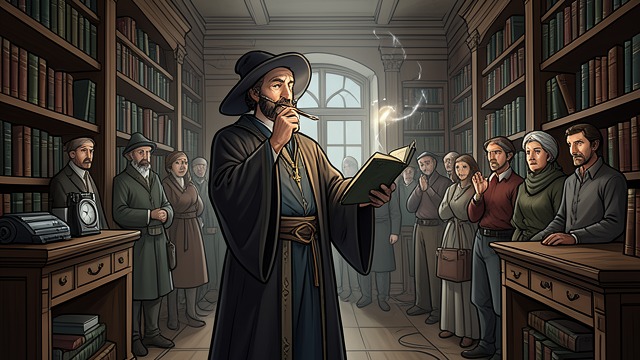
The Warning and the Reassurance
Wizarding humour
Dumbledore jokes that the book carries a Thief’s Curse for anyone who has read so far without purchasing it. The warning plays with the expectations of wizarding readers.
Reassuring Muggle readers
He then assures Muggles that the creatures to be described are fictional and cannot hurt them. His closing appeal to wizards uses the school motto, preserving the playful difference between audiences.
The ending manages two worlds at once: it sustains a fictional voice while protecting real readers from confusion. Dumbledore’s final role is both comic host and careful guide.
when the special edition is commissioned
in Dumbledore’s foreword
in the foreword’s account of Comic Relief U.K.
when the Harry’s Books fund is established
at the end of Dumbledore’s foreword
